
I've been hearing mixed messages from designers lately about what is going in our industry right now. Some seem to have lots of work and others are telling me they can't find a single client.
So this week I did what I often do when I want to try and work out what's going on, I put a poll up on my Instagram Stories
Here are the results of that poll:

Although this is just an informal audience poll (not formal research) it does tell us something interesting, so I've decided to focus this week on what's going on and share some of my thoughts.
Yes, the market is slow...
If you look at all major headlines right now you hear about housing market corrections, rate rises, global economic issues and supply chain costs and issues. This obviously has an impact on the work that interior designers do.
But this doesn't reflect the entire reality (which is why 44% of you still have lots of work). Because the slowdown isn't hitting everyone equally.
If you work at the top end of the residential or commercial market you probably haven't felt much of this. HNW homeowners aren't as exposed to interest rates or borrowing capacity. Most of them still have money to spend and most of them are going ahead with projects they were planning to do.
The issue is more with the middle and bottom end of the market that are getting hit from two directions at once.
The first is the economic one, which is obvious. The client who would have come to you for a refresh a few years ago is either now doing it themselves or they have put the project on hold. Clients are still out there but they have less to spend and are being much more cautious with the budget they have (so design fees are one of the things to go first).
The second issue for the middle to bottom of the market is AI. Clients can now generate their own mood boards, layouts and ideas in ChatGPT and think this replaces the need to use a designer (obviously we know it doesn't!). If you have a business where your key deliverables were things like mood boards or e-design you're likely struggling right now because AI has replaced the perception of needing to hire you. This shift isn't going to change back once the economic conditions become more favourable again.
The designers who still have clients are in a different part of the market and sell a different kind of service to a different kind of client. They sell outcomes, value and human expertise that AI can't replace.
So what should you be doing if you're struggling right now?
The first thing is to stop waiting for things to get better again. I've seen a few economic downturns over the 12 years I've been working in this industry. What is happening right now is a permanent shift, not a temporary dip, which means you need to be thinking longer term about how to protect your business.
Here are some practical things to do right now:
1: Take a look at your actual data
Don't just rely on broad industry commentary or a narrative that "the market is just slow so I don't have work". Look at your actual numbers from the past 12 months and work out what is going on:
- How many inquiries have you received?
- How many of these have been qualified (i.e. have the budget and size of project you can work on profitably)?
- How many paid consultations have you booked?
- How many fee proposals have you issued?
- How many projects have you won from those fee proposals?
- What is your average project value?
- What were the reasons that you lost projects?
Only your unique data will reveal whether you have a demand problem, positioning problem, pricing problem or sales problem (and each of these has a different fix).
2: Build an actual pipeline (i.e. start marketing before you need the work)
I talk about this a lot but one thing most designers don't do is proactive lead generation. This means that they might do a flurry of marketing or outreach, find a client or two, get busy working on those projects but then "don't have time" to do the marketing and outreach to keep their pipeline full. This leads to the feast or famine of client work that so many of you have.
Clients are currently taking longer to make buying decisions. You may have previously converted clients within a few weeks but it's now taking 3 months. So your marketing activity and outreach have to happen well before your current projects end. You need to be doing this EVERY DAY and keep lots of lead sources active at all times.
This involves developing strategic partnerships, nurturing referral sources, getting better at social media and reaching out to past clients regularly.
3: Stop making content for other designers
I see a really weird trend at the moment with so many of your Instagram feeds full of things like documentation tips, design tips, sample library shots and the BTS of your actual design process. While a little bit of this is good to share (for proof you know what you're doing), this content will largely result in saves and engagement from other designers, not inquiries from clients.
Your content needs to answer questions that your clients are asking like:
- what does it cost to renovate a kitchen right now?
- why do renovation budgets blow out?
- what is a realistic budget for furnishing a full home?
- when should a client bring in a designer (and why)?
- what do you typically charge in design fees and what does that cover?
- how does hiring a professional designer protect their investment?
That is the content your clients are interested in and will help them see your commercial value. Your goal is to build a following of potential clients, not a following of other designers or DIYers!!
4: Sell certainty and process
When clients are cautious you can stand out by showing you have a clear process.
One great way to do this is to have a paid strategic entry point (i.e. a paid design consultation). During this session you can discuss strategy and help them establish scope, budget, priorities and next steps.
This will give clients more confidence in you and your process without feeling the need to sign up for a huge service they don't yet understand.
5: Protect cashflow, have a buffer and cut expenses
It might be hard to build a buffer right now if work is slow, but a lesson to take from slower periods is to always have a buffer of cashflow sitting in your bank accounts.
I always keep at least 6 months of operating expenses in my business bank account. I also do the same in our personal accounts. This means that if there's ever a slow period I know I can pay my bills and I have some time to try new strategies before hitting a crisis point. I would highly recommend you do the same.
You should also look at your expenses and cut anything you aren't using. Things like subscriptions you forgot you had, an office you don't really need or software you aren't using any longer. A good way of doing this is to download your business and personal bank statements from the past year and go over them line by line. You will be surprised how many things you're paying for that you have forgotten about!
Although the economy is definitely slow right now I think we've moved into a permanent shift in terms of what clients will pay for and how they go about finding a designer. Hopefully some of these strategies help you think about what to do next.
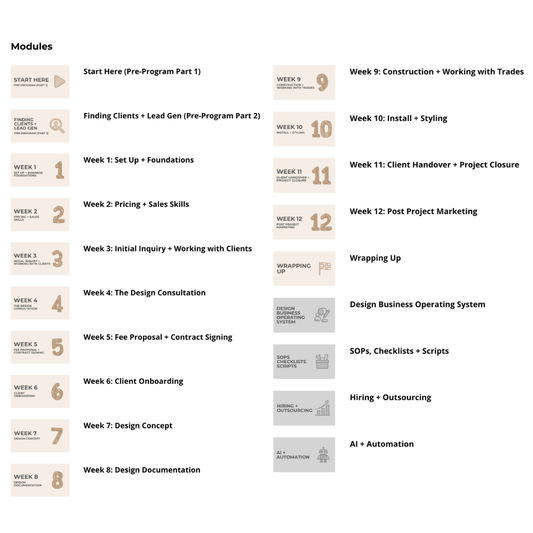
If you want my help implementing any of the suggestions here, we do it together in my business course.