
One of my Bootcamp students emailed me this week for some advice.
She’s growing her design business on the side while working a corporate job to pay the bills and she feels like she’s attracting clients with all the red flags I talk about regularly. But she also feels almost desperate to work with them because she’s trying to get projects and grow and she can’t tell if she should be working with these small projects or just avoiding them.
Her question to me was:
“Do you suggest holding out until I have my ideal client each time? Even if it means passing on projects when I would like to be making extra income?”
I thought I'd share my response because I think this is something lots of designers struggle with.
I was quite direct in my response and felt there were two things that needed proper diagnosis rather than just deciding whether or not to accept red flag clients. Here's what I said in my email back to her...
Firstly, are you offering a service that people actually want to pay for?
That means objectively assessing your design skills, the quality of your portfolio, your experience and whether the services you're promoting match what you're currently capable of delivering (and what the market is actually looking for).
When clients are paying you money you need to be confident that you can deliver the services you're selling to a professional standard.
Secondly, where is your sales process actually breaking down
You need to examine each stage of your process to identify the real bottlenecks.
For example:
1: Are you getting enough inquiries?
If not, what are you doing every day to actively find potential clients? How many hours each day are you spending on lead generation? Are you consistently following up and developing relationships or are you waiting for people to find you?
Finding clients is HARD!! Especially in the beginning. It takes so much work and so much getting out of your comfort zone. If you don't have enough clients you should be spending at least 2-3 hours a day on lead gen.
2: Are people inquiring but not booking consults?
If so, why? Are you charging for your initial consults? If you are charging are you charging enough to attract well qualified prospects? And if you're not charging you're removing an important qualification step and potentially attracting people who have no intention of paying for professional design advice. This is why I advocate so hard for paid consults only.
3: Are people booking paid consults but not progressing further?
Is this because they don't have the budget, don't see the value in your services, aren't confident in your ability to deliver or just aren't the right clients? Are you running your consult like a sales meeting (like the way I describe it in Bootcamp) or are you doing your own process? You need to understand why they're not moving forward and it very often has to do with not selling properly during consult.
4: Are you sending proposals but not winning projects?
If so, you need to look at your pricing, your scope of work, how you're presenting your services, what your fee proposal looks like and whether you're attracting people who are actually in a position to buy (the paid consult helps qualify the sorts of people who do have money to spend).
5: Are you winning projects but then having problems with the clients?
If so, that's a different issue and could point to weaknesses in your qualification process, onboarding, boundaries, scope management or how you're managing client expectations/experience. This does have a direct influence on the growth of your business though, because word of mouth from happy clients is an important part of building your pipeline of new clients.
And what about the 'red flag clients'?
The other thing I asked this designer to think about was what she actually meant by attracting clients with red flags.
Are these people who are engaging you and then becoming difficult to work with? Are they prospective clients you're deciding not to work with? Or are they people you're not successfully converting into paying clients in the first place?
Those are three very different situations that require a different solution.
I don't think you should wait around for your dream client, especially while you're still establishing your business. I took on plenty of small and not very exciting projects when I started and they were good because they helped me improve my skills and my ability to work with clients. But there's a difference between a project that isn't exciting and one that is commercially unviable or involves a client who doesn't respect your expertise or boundaries. I would avoid the latter.
So how do you actually fix what's going wrong?
My advice would be to stop looking at this as a general problem of attracting "red flag clients" and look more closely at exactly where your business isn't working by analysing where the bottlenecks are via the questions above.
Track what you're doing and the results you're getting at each stage, rather than relying on how things feel or from a place of panic because you desperately need the revenue (the worst position to be in for successful sales results).
When you do your analysis you may discover that you're not generating enough leads, you need to charge more for your consults, your sales process isn't converting or that your client qualification needs improving.
It might be lots of these things at once. But until you identify the actual problem it's impossible to fix.
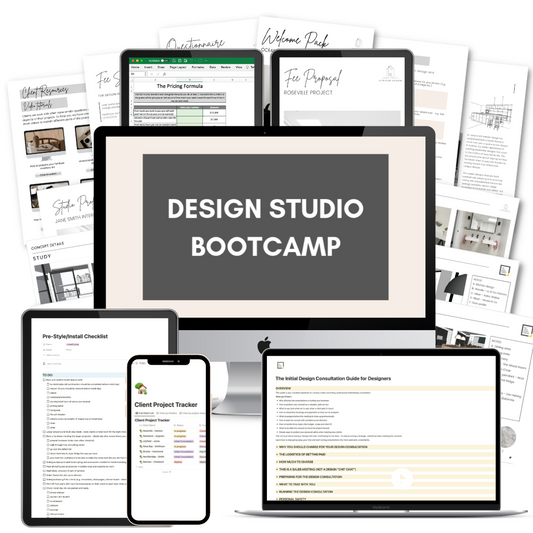
This is something that Bootcamp is designed to help you work through. The lessons on lead generation, consultations, pricing, proposals and client management give you the frameworks and tools to assess each part of your business and put proper processes in place.
One final thing about starting a business…
Don't underestimate how much sustained effort it takes to start a new business. It rarely happens quickly, especially when you're also working another job.
When I was juggling my own corporate job alongside getting my business off the ground in that first year I spent about 4 hours outside working hours (morning and night) and most weekends working on it. I also took SO many lead gen meetings with people where I was completely out of my comfort zone trying to sell myself. It was tough and I had to be very determined and do things I wasn't at all comfortable doing as an introverted person!
If you're struggling to get your business off the ground, ask yourself if you're really putting in the work required to pull this off and make sure you're working on the parts of your business that actually need fixing.
The only way to know that is to do a bottleneck analysis like the one I’ve described here.
Also, if this sort of personalised advice would be useful for you, that's what you get as a student in my Bootcamp program.