
Imagine you're about to spend $2 million renovating your house and you're looking for an interior designer.
You land on a designer's website and read that their service includes concept design, space planning, FF&E, custom joinery, documentation, procurement and construction support.
OK great, but what does any of that actually mean to the client???
Here’s what they are thinking while they are scrolling your site...
- they have a very strict budget and don’t understand what things cost or what they should be spending/saving on
- they have an architect who needs them to approve a floor plan that they aren’t really sure works
- they’ve met with some builders and they keep asking questions they don’t know the answer to
- they have 200 saved images and no idea how to turn them into one house (plus their husband likes completely different things to them!!).
- they're starting to realise how many decisions are coming and are scared of spending an enormous amount of money and getting things wrong.
THIS is how your potential clients are thinking and what is keeping them awake at night. What they are looking for is someone who can come in, make sense of all of that and tell them what to do.
They aren’t looking for an FF&E schedule!!!
This is where designers make selling their services much harder than it needs to be.
What you're likely doing at the moment is selling the process, but what your clients want is a result.
They still obviously need the process because their project won’t come together without space planning, documentation, selections, drawings, meetings and all the other work that sits behind a properly designed project. But none of that is the thing that makes them want to hire you.
They don’t want to buy “concept design” or “construction support”, they want to know that before they start knocking down walls and spending hundreds of thousands of dollars that somebody competent has properly thought through how the house should work. They want an expert to tell them not to spend $18,000 on a sofa that is the wrong size for the room or, when the builder suddenly needs an answer about something on site, there is someone who understands how to make the right decision.
This is the same service you already offer but a completely different way of talking about how you sell it.
Here's something practical you can do.
Look at your website and see how much of it is written in design industry language. I would bet there are lots of words like concept design, documentation, FF&E, procurement, selections, space planning and project support.
You need to explain what your service includes but also translate those things into why the client should care.
For example, don't just tell someone that you provide space planning. Explain that this is where you work out whether the house actually functions properly before money is spent, whether there is somewhere to put your ironing board at the end, whether someone has thought about where you’ll put your Xmas tree and whether there’s a powerpoint near that so it can actually be plugged in without an extension cord running across the room!
Don't just say you provide furniture layouts and FF&E specification. Explain that this stops them buying pieces that are the wrong size, spending too much on the wrong things or doing what lots of clients do and going to one furniture store and just buying the entire set they see on the showroom floor because it already all “works together”.
Don't just say you provide construction support. Explain that when questions come up on site (which they will!) there is someone who understands the entire design and can help make decisions without compromising everything else.
This is most likely what you’re missing in your sales copy right now because you are way too close to the work you do, so every part of the process feels super valuable and obvious to you. But it’s not obvious to the client!!
They don't know why a lighting plan matters or why furniture planning should happen early or how the fixtures for bathrooms need to be ordered and onsite at the time of framing. They also don’t know that detailed documentation drawings will save them money because they avoid a lot of errors on site.
All of this is your job to explain.
You need to be very specific about the problems you solve and you need to raise things clients haven’t thought of yet. They don’t know what they don’t know!!
So have a look at your website in this light and instead of just naming what you do think about it this way:
- What becomes easier when a client works with you?
- What mistakes are less likely to happen?
- What decisions are you helping them make?
- What are you taking off their plate?
- What are they getting access to that they could not easily do themselves?
- How are you saving or making them money?
That is where the value of what you do as a designer sits and it’s becoming more and more important that you can explain this to clients as AI starts to seem like an alternative solution to hiring you.
If you have a client who is renovating a $4 million house and they already feel completely overwhelmed by the project they are probably looking for someone to come in and take control of the entire design problem.
AI can’t do that but you can!
So if your website only tells people that you do concept design, documentation, FF&E and construction support, then you’re leaving it up to the client to work out why any of that is worth paying for. It's even worse if you're using language like "we make your home feel great to live in"
You need to make the value of what you do obvious. Explain the judgement that sits behind the drawings, the decisions you are making before problems happen, the expensive mistakes you are helping them avoid, the amount of mental load you are taking off them throughout the project and the way you think about all the things they don’t even know to think about yet.
That also makes your service much harder to compare with a cheaper designer, a furniture store offering “free design services” or an AI tool that can spit out a room concept in 30 seconds.
So go through your website this weekend and look at it from the point of view of the person about to spend millions of dollars on their house and ask whether you’ve actually explained why any of what you do matters to them.
They will pay you $50K, $100K or whatever your fee is because they want someone who knows what they’re doing to help them get a very complicated and expensive project right.
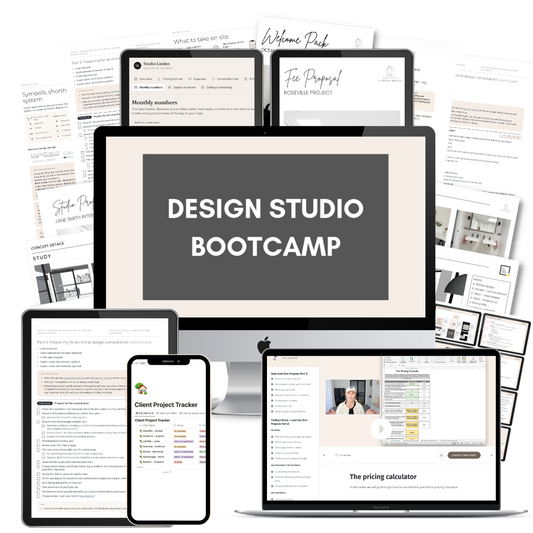
Also, if reading this has made you realise that your own website and sales process are mostly describing what you do rather than why any of it matters, this is exactly the sort of thing we work through inside Design Studio Bootcamp.
We look at how you position your studio, the services you offer, how you package and price them, what you say on your website, how you handle enquiries and consultations and how you present your fees so clients actually understand what they're paying for.