
I hear this story all the time from designers in my DMs and emails... they book consults, they show up prepared, the clients seem interested during the meeting, but then they get ghosted (e.g. the client stops responding or says they are still deciding).
What is almost always happening here is that you are not running your consultation process well. The consult should be run as a sales meeting (not a design "chit chat") and the process you use is critical to converting clients to larger projects.
Here are the common mistakes I see designers make during the consult process...
Talking too much instead of listening
You're so eager to show the client how brilliant you are that you spend the entire consult talking at them about your process, your ideas and your past projects. Meanwhile, they're trying to tell you what they actually need and you're not hearing it.
Listen to how the client expresses their problems and pay attention to the specific words they use, their concerns and the things they keep coming back to. Repeat the language they are using back to them as this will help them feel understood.
Interrogating them with too many questions
There's a difference between asking thoughtful questions and running through a checklist like you're conducting an interview. Let the client tell you their story in their own words. Ask open questions and then be quiet and listen. You'll learn far more from how they naturally describe their situation than you will from giving them a checklist of questions to answer.
Seeming desperate for the sale
In sales, the least desperate person generally wins. If you're too eager, too available or too willing to drop everything for them, it suggests that you're not in demand. If you're not in demand, they assume there's a reason for that!!
I'm not suggesting you play games or be difficult but positioning yourself as a professional who has a schedule and a process will be much better than looking like you're sitting around waiting for the phone to ring.
Trying to sell the entire project in one go
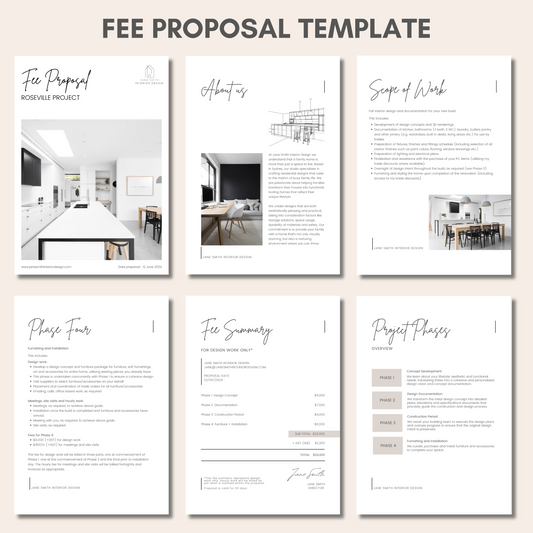
The only job in the consult is to sell the next step of your sales process, which is to get them to agree to you putting together a fee proposal for their project. You don't need to overwhelm them with your full project process or what the 6 month timeline would look like. Just explain that if they want to move forward the next step would be for you to prepare a fee proposal outlining your process and fees and ask them if that would be something that would be helpful. Your fee proposal can then do the job of closing the client.
Don't try and close the entire job during the consult. Break it down and sell just one small commitment at a time. You want to build trust in stages rather than asking for complete commitment upfront.
Letting the client lead the process
During the consult you need to lead the process (I teach the exactly how to do this step by step in my business mentoring program if you need help).
Here are the basics of how to run a consult that converts:
- Arrive exactly on time (being late is a no but being early can also be hugely annoying if someone is in the middle of something)
- Have a conversation opener ready for shy clients
- Start with a house tour, not a formal sit down (clients will drop their guard faster this way)
- As you walk, sell the transformation i.e. help them picture what's possible and share some of your design ideas
- Solve problems and back them up with past project examples as this builds your credibility e.g. "Yes, toys are a huge problem! Have a look at this image (open it on your phone) of a project I just finished where we designed a full cabinetry solution to keep toys organised"
- Once the tour is done, sit down and gather scope, budget and aesthetic fit
- Close by selling the next step only i.e. let them know you'll send a fee proposal in the next 24 hours (obligation free). Also, pro tip, never discuss your fees on the spot!!
Clients are hiring you to take control of a confusing process. If you can't even control a one hour consultation, why would they trust you to control a six month renovation?
Running blind with no sales process
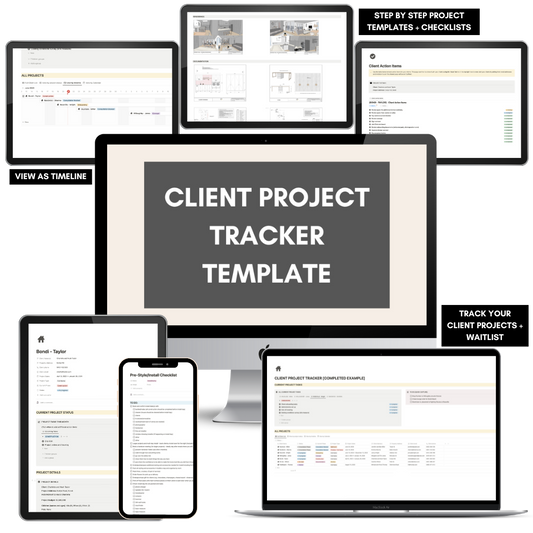
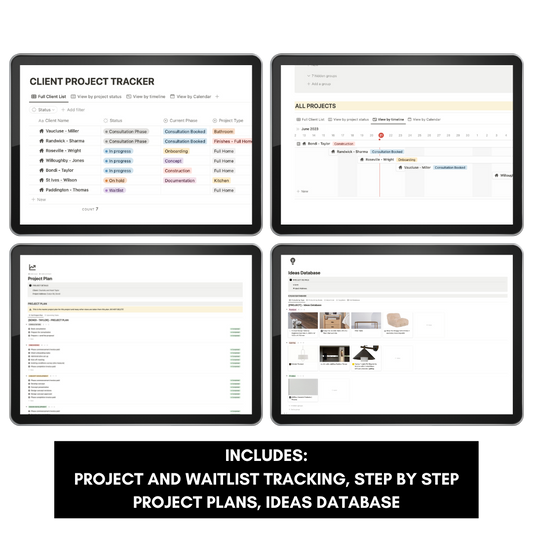
Are you tracking your leads? Do you know your conversion rate? Can you see where potential clients are dropping off? If not, you're flying blind.
You need a sales process that you follow closely. Every potential client should move through the same funnel in the same way. You need to then track it so you know what's working and what isn't.
Without this you have no idea why you're losing clients or how to improve.
Overcomplicating the process
Every additional step you add to your sales process is another opportunity for the client to drop off. Make it simple and remove friction wherever possible.
If they have to fill out a long form, then wait three days for you to respond, then book a time two weeks away, then receive a complicated proposal, then wait for you to follow up you're making it way too hard to make money!!
Two things that will fix your sales confidence
The first is being confident in what you're selling. If you lack confidence in your knowledge, skills or experience, clients will pick up on it. If you don't genuinely believe you know what you're doing, you need to get more training or experience before taking money from people. You're going to be working on a client's largest financial asset so I don't recommend "faking it til you make it" in this situation. Get the skills first, you will then be more confident in what you're selling.
The second is having a sales process that you follow consistently with every client. When you've done the exact same consult twenty times, it stops feeling awkward and starts feeling natural. You know what works, you know what questions to ask, you know where the conversation goes next and you know how clients are likely to respond.
Having a formalised sales system is what will ultimately bring you confidence and help you actually get good at sales because you will be following a proven process that you've refined over dozens of conversations.
So stop making it up as you go along and build a system and follow it religiously. Then track the results and refine what's not working. That's how you get better at sales.
Also - if you need help with any of this we build it together step by step in my business mentoring program.