
I got a question in my business mentoring program this week that's worth talking about because I think many of you could run into something similar.
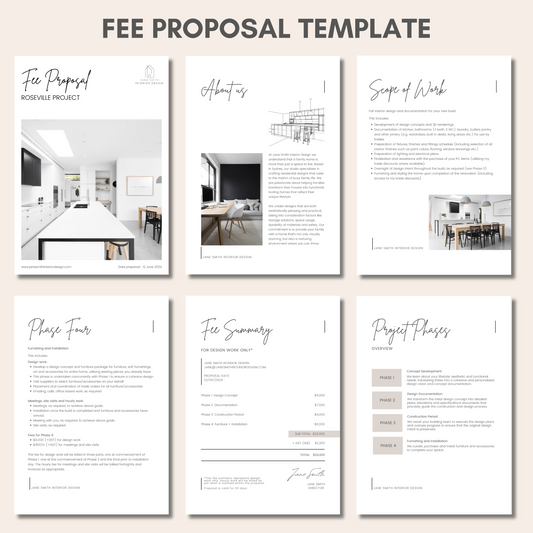
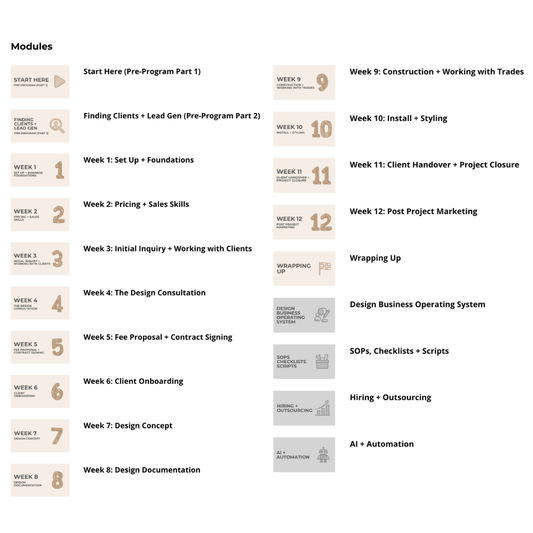
The designer (let's call her Jane) had followed the entire process I teach in Bootcamp. She'd handled the initial inquiry professionally, done a well run consultation, sent a fee proposal and the client had accepted her price.
But the client had come back with two requests. First, they wanted Jane to compress the project timeline and second, they wanted her to add penalty clauses for delays.
Let's unpack why these are red flags to be careful of.
The compressed timeline request
When clients want to rush your design process before work has even begun, they usually fall into one of three categories.
1: They're unrealistic about what good design actually requires and don't understand that proper space planning, sourcing, documentation and client decision making all take time
2: They're setting you up to fail so they can blame you later e.g. a rushed timeline means any hiccup in the process immediately puts you "behind schedule" in their eyes.
3: They're planning to micromanage and make constant changes, which completely contradicts a rushed timeline.
Any of these scenarios makes for a difficult project, but combined with the second request, it becomes something worse.
The penalty clause demand
This is the biggest red flag for me. Penalty clauses are extremely rare in design work. In all the years I ran my design business, not once did a good client ask me to include them in a contract. The clients who paid me well, respected my expertise and made the projects enjoyable never brought it up.
So when a client asks for penalty clauses before you've even started working together, what they're really saying is "We don't trust you and we're planning for you to fail."
Penalty clauses protect the client's interests while putting all the risk on you. They set up an adversarial relationship from day one and suggest the client could be impossible to please.
What this client is really telling you
When I looked at these two requests together I could see a clear picture of who this client is.
They're probably controlling, risk averse and potentially litigious. They're already thinking about contractual penalties and what happens when things go wrong, rather than how to set the project up for success from the start.
What normally happens with clients like this
This type of client has a typical pattern of behaviour. They make changes throughout the project, they change their mind about finishes that have already been approved, they are constantly reconsidering layout options or adding new requirements as they think things through.
Those changes push the timeline and also requires new sourcing, new documentation and new approvals.
But suddenly you're "late" according to the "rushed timeline" in the contract and even though the delays were caused by the client's own behaviour they invoke the penalty clauses on you. They then use this as an excuse to reduce your fee or hold back payment.
Meanwhile, you've been working twice as hard because difficult clients always take more time and energy and you're constantly stressed.
You end up making less money than you agreed to, for more work than you anticipated, while dealing with someone who treats you like an adversary instead of a professional they hired.
Should you take a client like this?
When you're building a business and you need the revenue, turning down a paying client feels almost impossible and many new designers would consider moving forward despite all these red flag.
If you do decide to take a client like this here is what I would do:
- Include a clause that makes the timeline void if they make any changes or additions to the scope
- Charge a premium for the compressed timeline. At least 30-50% more than your normal fee, because you're taking on significant additional risk and stress
- Define very clearly what constitutes a delay on your end versus theirs, versus others involved in the project
- Speak with a lawyer before adding any new clauses or agreeing to anything to make sure you're protected. Never agree to these things without having a water tight contract prepared by a professional. Don't DIY your legal work!!
But personally I would avoid a client like this and look for someone who is a better fit. Red flags generally don't get better as a project moves forward and this client will almost certainly change their mind constantly throughout the project and blame you for delays they cause. They'll then likely withhold final payment over minor issues or might leave a bad review regardless of the quality of the work. They'll also take up three times the time and energy of a normal client and cause a lot of stress. Not worth it!!
The bigger lesson here
Jane followed the process I teach in Bootcamp perfectly and the process worked exactly as it should. It showed that this client was going to be problematic before she committed to months of work with them. That's the entire point of having a proper professional process with a consultation that is as much about you learning about the client as it is about the client learning about you.
A professional process is designed to land the right clients and filter out the ones who are going to make your professional life miserable.
When someone shows you who they are this early, trust your gut and protect your energy and sanity. Every difficult client you take on uses up resources that could be going to good clients and every time you ignore red flags because you need the money, you're teaching yourself that your professional boundaries don't actually matter.
This is your business and your sanity and red flag clients are normally not worth the money!