
The design industry runs on myths about how to charge, how to find clients and how to run a studio. These myths get repeated so often they start to feel like facts, but they’re the reason so many talented designers are exhausted, underpaid and wondering why their “dream job” barely pays the bills.
Here are some of the myths designers keep believing…
1: Charge less until you get more experience
Charging properly is what teaches your market how to value you. If you frame yourself as the “affordable designer” you’ll attract clients who treat you like help, not like a professional.
2: Trade discounts as a business model
The idea that you can build a sustainable business by clipping the ticket on furniture orders is so entrenched in this industry (and is not helping you make money). Trade discounts are inconsistent and come with hidden risks most designers don’t understand.
Clients also hate feeling ripped off and if they discover you’re making your money by secretly inflating their sofa order, trust disappears (and trust is everything in high end services). That’s why most serious industries have already regulated this practice out.
I've spoken about this in other posts but fee for service is how you build trust with clients and start being treated like a professional consultant.
3: More staff = more success
Designers think that when they hire a few staff and lease a fancy office they suddenly look like a “real” studio. The problem with doing this is you’ve now built a recurring cost base that eats into your profit. So before you’ve even opened your laptop each month you owe $20–30K in salaries, rent, insurance and overhead.
Most small studios don’t have the pipeline to carry those fixed costs so the owner ends up stressed and saying yes to bad fit clients just to make payroll for their team.
A lean model with flexible support (contractors, freelancers, offshore) is smarter. Flashy doesn’t mean profitable!!
4: Say yes to every client
If a client haggles on price, ignores your boundaries or treats you like a personal shopper then run away (fast!). Not all clients are a good fit and saying yes out of fear of not finding another client will end up making you hate what you do.
5: Free consults get you more projects
Free consults show potential clients that your time isn’t worth anything. A paid consult sets the tone that you’re a professional and it also filters out tyre kickers. I’ve talked a lot about this one before so don’t need to go into this again!
6: Clients don’t want to talk about money
Most designers tiptoe around talking about project budgets, but money is the foundation of an entire project and pretending it doesn’t exist until later won't help you build trust with your clients or help them understand if what they want to achieve is realistic for their budget.
The best studios start talking about money from day one. If a client isn't realistic about their budget don't take them on unless they increase it (or you'll be setting yourself up for failure from the start).
7: Referrals will always keep you busy
I’ve seen studios close because one builder, one developer or one happy client stops feeding them work. Word of mouth is valuable but it’s not a lead generation plan. A real business runs on multiple lead sources so no one client or supplier owns your pipeline.
The lesson
Too many designers are copying broken business models they see other designers using, but if you want to build a studio that actually makes money you need to start acting like a professional service.
That means making a few key shifts:
- Act like the professional services that do make money (e.g. financial services, lawyers, doctors) and charge for your advice and outcomes. Don't use hidden markups to make your money. In due course these will be regulated out of the design industry so you may as well adjust your pricing model now.
- Don't sign up for unnecessary expenses. Big teams and flashy offices might look good on Instagram, but they will kill your profit. Keep your fixed costs low and bring in contractors when you need them. This will mean there's money left to pay you!
- If your work only comes from referrals or a single builder your business is at risk. Build marketing and lead generation systems so you control your pipeline.
- Treat money as the organising principle of every project. Get comfortable leading conversations about budget in your first client meeting.
- Interior design is a high end, advisory service and you make money when you act like a professional consultant, not when you chase discounts.
The business of design isn’t complicated, it just requires you to step out of the myths the industry has normalised and instead operate the way serious professional services already do.
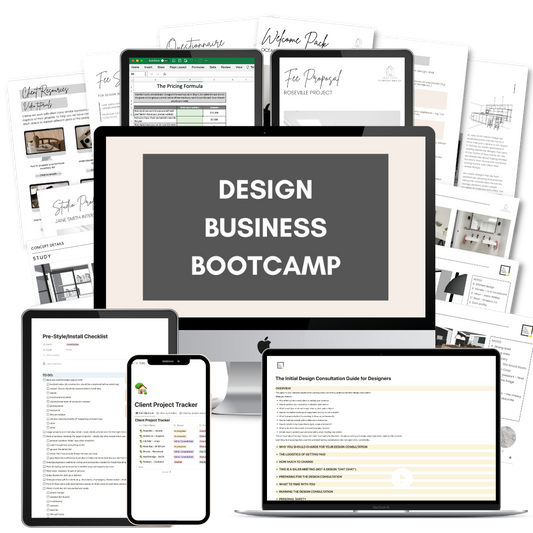
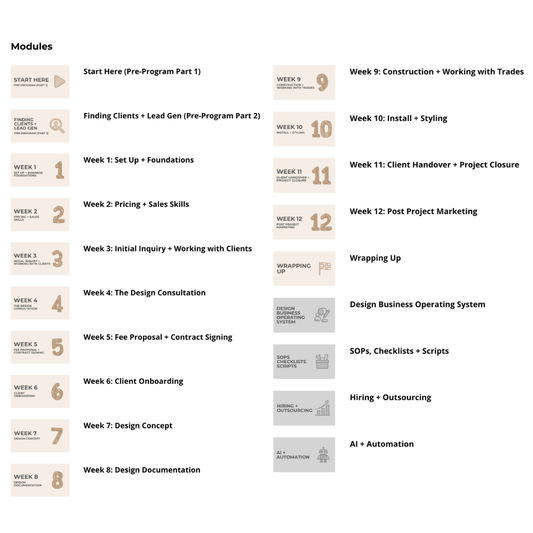
If you need any help with this, we cover it all in my business mentoring program for designers - Design Business Bootcamp